
Brown lip gloss: how to choose your shade and coverage
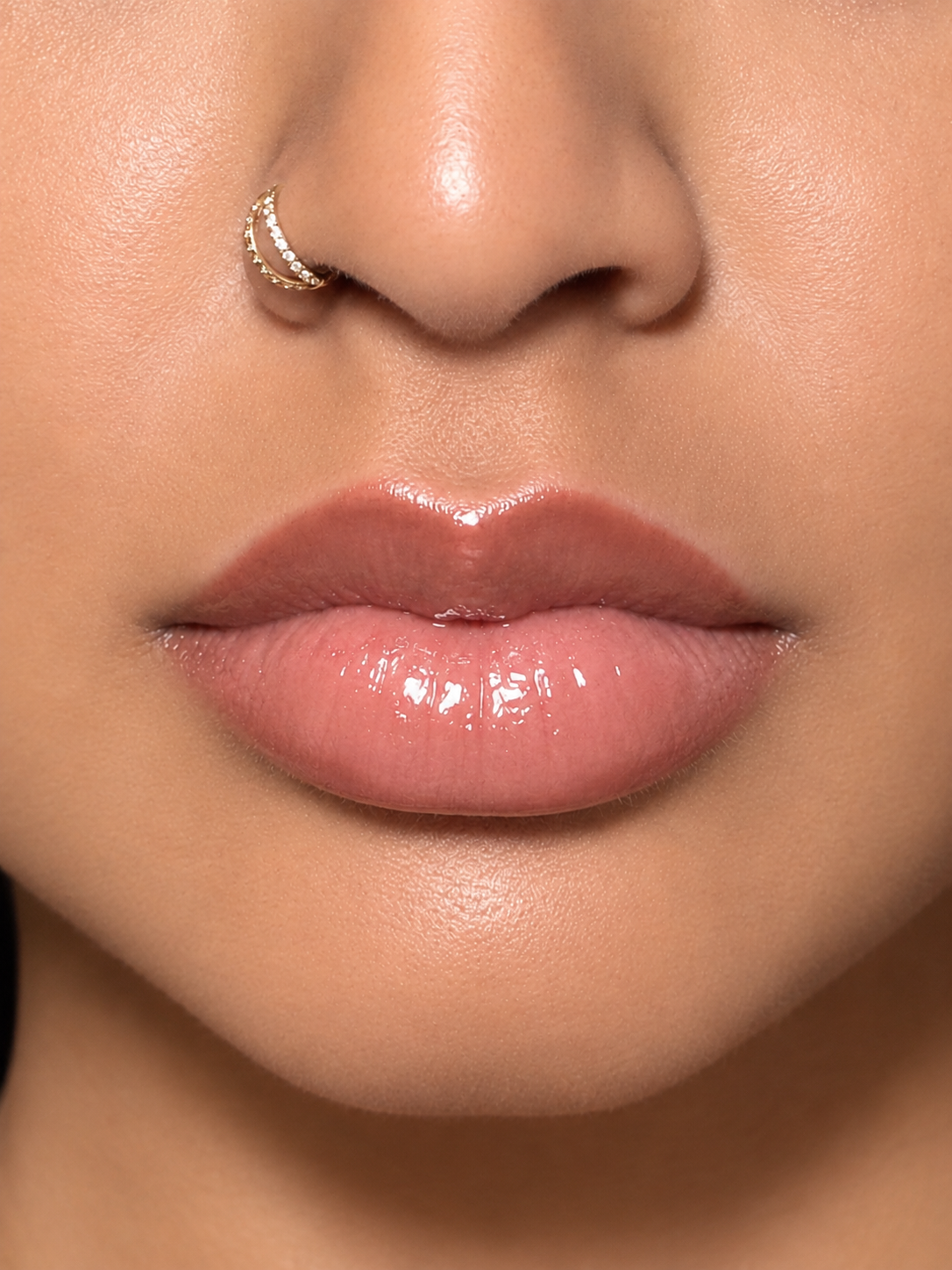
Choose brown lip gloss by looking at three things together: the brown itself, how much colour the formula deposits, and the natural lip colour showing underneath. A sheer cocoa-brown gloss is a different purchase from an opaque chocolate lip colour, even when the tubes look similar.
The most useful question isn’t “Which brown suits everyone?” It’s “How much do I want this brown to change my lips?” Answer that first and the options become easier to sort.
Start with sheer versus opaque
A sheer brown gloss adds a translucent layer of colour. Your natural lip colour remains part of the finished shade, so the result can differ from an arm swatch or from someone else wearing the same tube.
A more opaque lip product covers more of that base. If you want a very specific solid brown, look for coverage as carefully as you look for colour. Don’t buy a sheer gloss expecting it to behave like a full-coverage lipstick.
“Buildable” means you can adjust the application; it doesn’t guarantee that repeated layers will turn a sheer formula opaque. More product also changes how much is sitting on the lips. Stop when you like the balance of colour and feel rather than chasing the tube’s appearance.

Read the brown, not just the shade name
Brown gloss can lean golden, reddish, pinkish or cool and muted. Shade names such as cocoa and caramel are a starting point, but check the colour description too.
For a softer change, choose a sheer brown close to your natural lip colour. For more contrast, try a deeper brown or pair your gloss with a darker liner.
You don’t need to limit yourself to a rule such as “warm skin can only wear warm brown.” Choose harmony if you want the lip to blend into your makeup; choose contrast if you want the colour or outline to be more visible. Both are intentional looks.
Your natural lip colour is part of a sheer shade
Look at your bare lips in ordinary daylight before shopping. Notice the centre and the outer edge, not just the overall colour. If your upper and lower lips differ, a sheer gloss may leave that difference visible.
That isn’t a fault in the product or in your lips. It’s what transparency allows. If your aim is a more uniform base, you may prefer a more pigmented lip product underneath rather than trying to get opaque coverage from gloss alone.
Want a brown outline without an all-over tint?
You can create the brown colour with liner and keep the gloss clear. Blend the liner inward for a soft transition, or leave more of the outer edge visible for contrast.
Green & Jaded adds clear pearlescent shine without adding a brown tint. Follow our liner-and-gloss tutorial for the placement and blending steps.
A sheer brown option: Rhode Espresso
Rhode Peptide Lip Tint in Espresso is described by Rhode as a rich brown with sheer-but-buildable colour and a high-shine finish. It is a useful comparison when you’re browsing brown lip products: a tint can offer gloss-like shine, and a deep-looking shade name doesn’t automatically mean opaque coverage.
For a softer result, begin with a light layer. If your priority is a solid, uniform brown, choose a more opaque lip colour rather than trying to build a sheer tint into one.
Three ways to style brown gloss
Bare lips, softly tinted
Start with a light application to see how the brown interacts with your own lip colour. Check it before adding another layer. This is the simplest way to decide whether you want more colour or just more shine.
Brown liner, blended edge
Choose the liner for the outline you want: close to your natural colour for softer definition, or more contrasting for a visible frame. Blend the inner edge before adding gloss so you can control the transition.
The gloss and the liner do different jobs. A darker outline does not require a thick layer of gloss over the top.
Lipstick underneath, gloss on top
If you want more coverage, create that colour with lipstick first, then add a small amount of gloss. A brown-tinted gloss can change the colour beneath it; choose clear gloss if you mainly want to change the finish instead.
If the clear option contains shimmer, that changes the finish too. Our guide to clear shimmer shows why “clear” and “shimmer-free” are not the same thing.
Brown lip gloss questions, answered
Can brown lip gloss look natural?
Yes, if its colour and coverage create the effect you want alongside your natural lip colour. A sheer finish can be subtle, but “natural” isn’t one shade. A pale nude that disappears on one person can look distinctly light on another.
Can I wear brown gloss without lip liner?
Absolutely. Liner is useful for a particular shape or contrast, not a requirement. Try the gloss on its own before deciding something is missing.
Why does the gloss look pinker on me than in the tube?
With a sheer product, your natural lip colour can remain visible through the tint. Lighting and anything underneath it can also affect the result. If you want a browner result, try a brown liner underneath rather than simply piling on more gloss.
What is the best brown lip gloss?
The best choice depends on your desired shade, coverage, finish and feel. Start with the shade and coverage you want, then narrow your choice by shimmer and feel. A sheer rich-brown tint, an opaque chocolate lip colour and brown liner with clear gloss give you different looks.
Want colour across the lips? Start with a brown tint such as Rhode Espresso. Want a defined edge with clear shine? Pair your liner with Green & Jaded. Our lip oil versus lip gloss guide can help you choose between product types.
Keep reading: How to apply lip gloss · How to make lip gloss last longer
